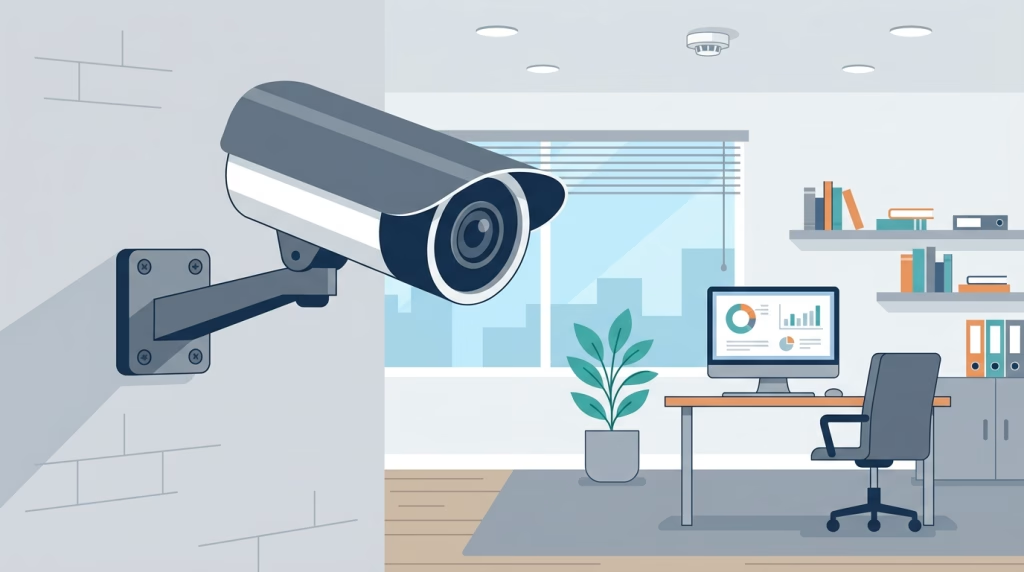
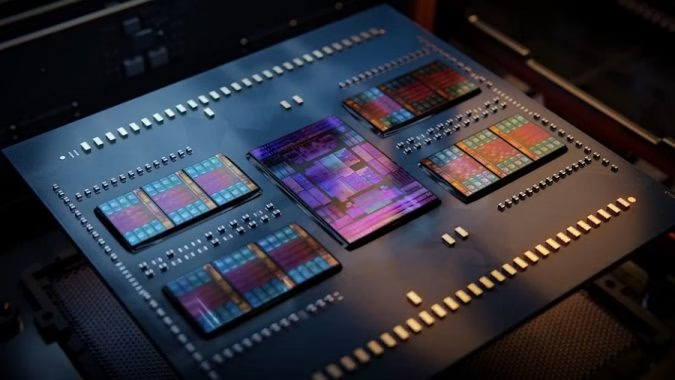
Chiplet microarchitecture represents a major leap forward in CPU design, replacing the old monolithic approach with a flexible, modular layout that connects multiple smaller dies, or “chiplets,” within one processor package. Each chiplet is a self-contained unit dedicated to specific tasks such as compute, I/O, or cache management, interconnected by a high-speed fabric. This approach allows manufacturers like AMD to scale performance more efficiently—adding cores, memory bandwidth, and cache without the yield and thermal limitations of a single large die. For video surveillance systems, this means the CPU can handle heavier, more complex workloads while maintaining lower latency and higher consistency across all threads.
What Are Chiplets?
Chiplets are small, modular chips that can be combined to build larger, more powerful processors. Instead of relying on one large, complex chip, this approach breaks the design into smaller, specialized components that can be mixed, matched, and upgraded easily. This modular structure reduces development time, lowers costs, and offers greater flexibility for designing high-performance systems.
By allowing different chiplets to handle specific functions—like processing, memory, or communication—manufacturers can create tailored solutions optimized for their needs. This scalability and reuse of existing chiplet designs make production more efficient and cost-effective.
As demand for high-performance computing and data analytics grows, chiplets are transforming the semiconductor industry. With the market expected to reach over $47 billion by 2031, chiplet technology is poised to power the next generation of faster, more efficient, and customizable electronic systems.
Performance Improvements
From a system architecture perspective, chiplet-based CPUs bring significant advantages to modern video management systems (VMS). By distributing compute resources across multiple chiplets, the CPU can process numerous parallel workloads more effectively. This is critical in surveillance environments where hundreds of simultaneous video streams must be decoded, analyzed, and recorded in real time. Each chiplet can focus on a set of threads or specific processing functions, ensuring smooth frame delivery even under high camera counts. The result is better performance scaling across multi-threaded applications and more predictable throughput under heavy load—key factors in maintaining reliability and quality of service for mission-critical security deployments.
Power Savings
Power efficiency is another area where chiplet design shines. Smaller chiplets dissipate heat more effectively and require less power to operate compared to large monolithic dies. This translates into tangible energy savings and reduced cooling requirements at the system level. In a video surveillance context, where servers often run 24/7, the reduction in power draw can lead to major operational cost savings over time. Less heat output also means improved component longevity and more stable performance, further extending the lifecycle of each server while reducing maintenance costs.
The true power of chiplet CPUs becomes apparent in their ability to maximize multi-thread streaming performance. Video surveillance workloads rely heavily on parallel processing—each camera feed representing its own data stream that must be decoded, analyzed for motion or events, and written to storage. Chiplet-based CPUs with high core counts and wide memory channels excel at this kind of workload, enabling modern VMS platforms to process hundreds of high-resolution H.264 and H.265 streams simultaneously. This ensures that even as camera resolutions increase and analytics become more demanding, system performance remains fluid and dependable.
Ultimately, chiplet microarchitecture delivers a rare combination of performance, scalability, and efficiency that directly benefits video surveillance projects. Integrators can deploy fewer servers to achieve the same or greater throughput, lowering total cost of ownership while improving reliability and performance margins. Combined with advances in video analytics and AI processing, chiplet-based CPUs are setting a new standard for how modern VMS platforms are architected—enabling smarter, faster, and more cost-effective surveillance infrastructure built to meet the evolving demands of security environments.